Beyond the Horizons of Earth
From a small church in Thumba to the Moon's South Pole, ISRO's history is a saga of innovation. Established in 1969, it turned the vision of Dr. Vikram Sarabhai into a reality.The Indian Space Research Organisation (ISRO /ˈɪsroʊ/)[a] is the national space agency of India, headquartered in Bengaluru, Karnataka. It serves as the principal research and development arm of the Department of Space (DoS), overseen by the Prime Minister of India, with the Chairman of ISRO also serving as the chief executive of the DoS. It is primarily responsible for space-based operations, space exploration, international space cooperation and the development of related technologies.[3] The agency maintains a constellation of imaging, communications and remote sensing satellites. It operates the GAGAN and IRNSS satellite navigation systems. It has sent three missions to the Moon and one mission to Mars. Formerly, ISRO was known as the Indian National Committee for Space Research (INCOSPAR), which was set up in 1962 by then-Prime Minister Jawaharlal Nehru on the recommendation of scientist Vikram Sarabhai. It was renamed as ISRO in 1969 and was subsumed into the Department of Atomic Energy (DAE).[4] The establishment of ISRO institutionalised space research activities in India.[5][6] In 1972, the Government set up a space commission and the DoS bringing ISRO under its purview. It has since then been managed by the DoS, which also governs various other institutions in the domain of astronomy and space technology.[7]
The Mars Orbiter Mission (MOM) made India the first nation to reach Mars in its first attempt. It remains one of the cheapest and most efficient planetary missions ever conducted.The Mars Orbiter Mission (MOM), also known as Mangalyaan, was India's first interplanetary mission and marked a significant achievement in space exploration. Launched on November 5, 2013, by ISRO, MOM successfully placed India on the path to becoming the first Asian nation to reach Martian orbit. The mission was a technology demonstrator project aimed at developing the necessary technologies for an interplanetary mission. However, the MOM orbiter lost communications with Earth in April 2022 and was officially declared dead in October 2022. Wikipedia ISRO's next mission, Mangalyaan-2, is set to launch in 2030 and aims to achieve India's first-ever soft landing on the Martian surface. This mission will include a lander, a rover, and possibly a mini-helicopter, marking a monumental leap in India's interplanetary exploration. The Mangalyaan-2 mission is expected to include advanced technologies for a safe touchdown and will be launched aboard the LVM3 rocket. www.indiatoday.in +4
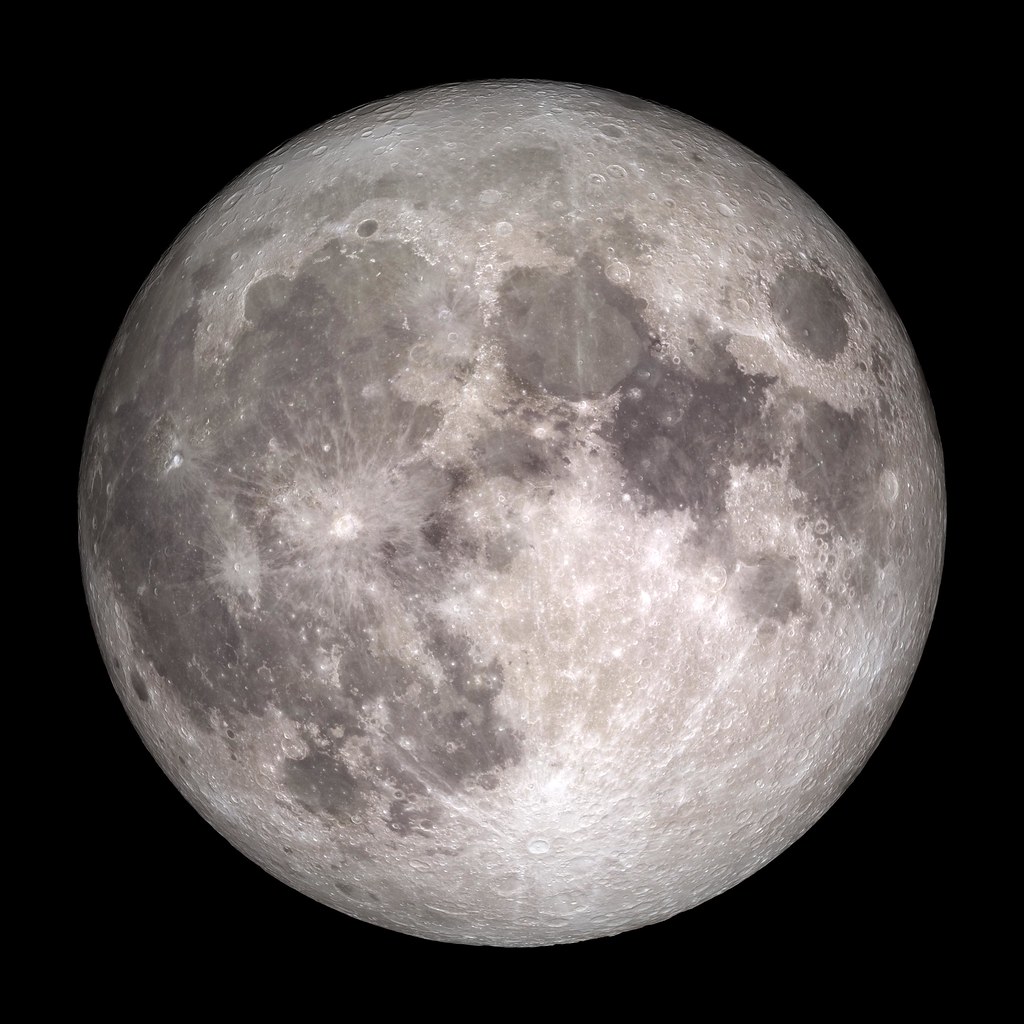
Chandrayaan-3 successfully landed on the Lunar South Pole on August 23rd, 2023. This success established India as a global space superpower.Chandrayaan-3 is a follow-on mission to Chandrayaan-2 to demonstrate end-to-end capability in safe landing and roving on the lunar surface. It consists of Lander and Rover configuration. It will be launched by LVM3 from SDSC SHAR, Sriharikota. The propulsion module will carry the lander and rover configuration till 100 km lunar orbit. The propulsion module has Spectro-polarimetry of Habitable Planet Earth (SHAPE) payload to study the spectral and Polari metric measurements of Earth from the lunar orbit. Lander payloads: Chandra’s Surface Thermophysical Experiment (ChaSTE) to measure the thermal conductivity and temperature; Instrument for Lunar Seismic Activity (ILSA) for measuring the seismicity around the landing site; Langmuir Probe (LP) to estimate the plasma density and its variations. A passive Laser Retroreflector Array from NASA is accommodated for lunar laser ranging studies. Rover payloads: Alpha Particle X-ray Spectrometer (APXS) and Laser Induced Breakdown Spectroscope (LIBS) for deriving the elemental composition in the vicinity of landing site.
PSLV: The Workhorse of ISRO.
LVM3: The Heavy Lift Monster.
ISRO’s rockets carry satellites for navigation, communication, and weather forecasting.ISRO's launchers are crucial for carrying spacecraft to space, with three active operational launch vehicles: Polar Satellite Launch Vehicle (PSLV), Geosynchronous Satellite Launch Vehicle (GSLV), and Geosynchronous Satellite Launch Vehicle Mk-III (LVM3). The PSLV is versatile, capable of launching Earth Observation, Geo-stationary, and Navigation payloads. The GSLV has indigenous Cryogenic Upper Stage, enabling the launching of 2-tonne class communication satellites. The LVM3, the next generation launch vehicle, can launch 4-tonne class communication satellites and 10-tonne class payloads to Low Earth Orbit (LEO). The SSLV is being developed to meet the small satellite launch market on demand-driven basis. ISRO's Launch Vehicle Programme spans numerous centers, including Vikram Sarabhai Space Centre, Liquid Propulsion Systems Centre, and ISRO Propulsion Complex, and is integrated at Satish Dhawan Space Centre.
The Gaganyaan mission will soon carry Indian astronauts (Gaganauts) into space. Following this, ISRO aims for a Space Station by 2035.ISRO has ambitious plans for the future, including the Gaganyaan human spaceflight mission, Samudrayaan deep-sea exploration, and Chandrayaan-4 lunar mission, with several launches scheduled between 2026 and 2027. Key Upcoming Missions Gaganyaan (2026): This is India's first manned space mission, aiming to send astronauts into Low Earth Orbit (LEO). A precursor uncrewed mission with a humanoid robot named 'Vyommitra' is planned for 2025 to test systems before the crewed flight. This mission is designed to establish India's independent capability for human spaceflight and reduce reliance on foreign agencies. 2 2 Sources Samudrayaan (2026): This mission focuses on deep-sea exploration, where a three-member crew will be sent in a submersible vehicle to study marine biodiversity and mineral resources at depths of 6,000 meters. This initiative aims to unlock access to critical minerals and enhance India's capabilities in marine research. 1 1 Source Chandrayaan-4 (2027): Following the success of Chandrayaan-3, this mission aims to return lunar samples to Earth, furthering India's lunar research and scientific standing globally. It is currently in the design phase. 2 2 Sources